Overview
| Project title | Conservation Union for Management of the Baltic Harbour Porpoise Populations and Their Habitat (CUMBIAH) |
Funding |
|
| Project duration | January 2026 to December 2030 |
| Number of project partners | 17 |
| Countries involved | 8 |
| Project lead | Tim Taugnitz, Anja Gallus |
| Project management | Samantha Look |
Project Partners


Project Description

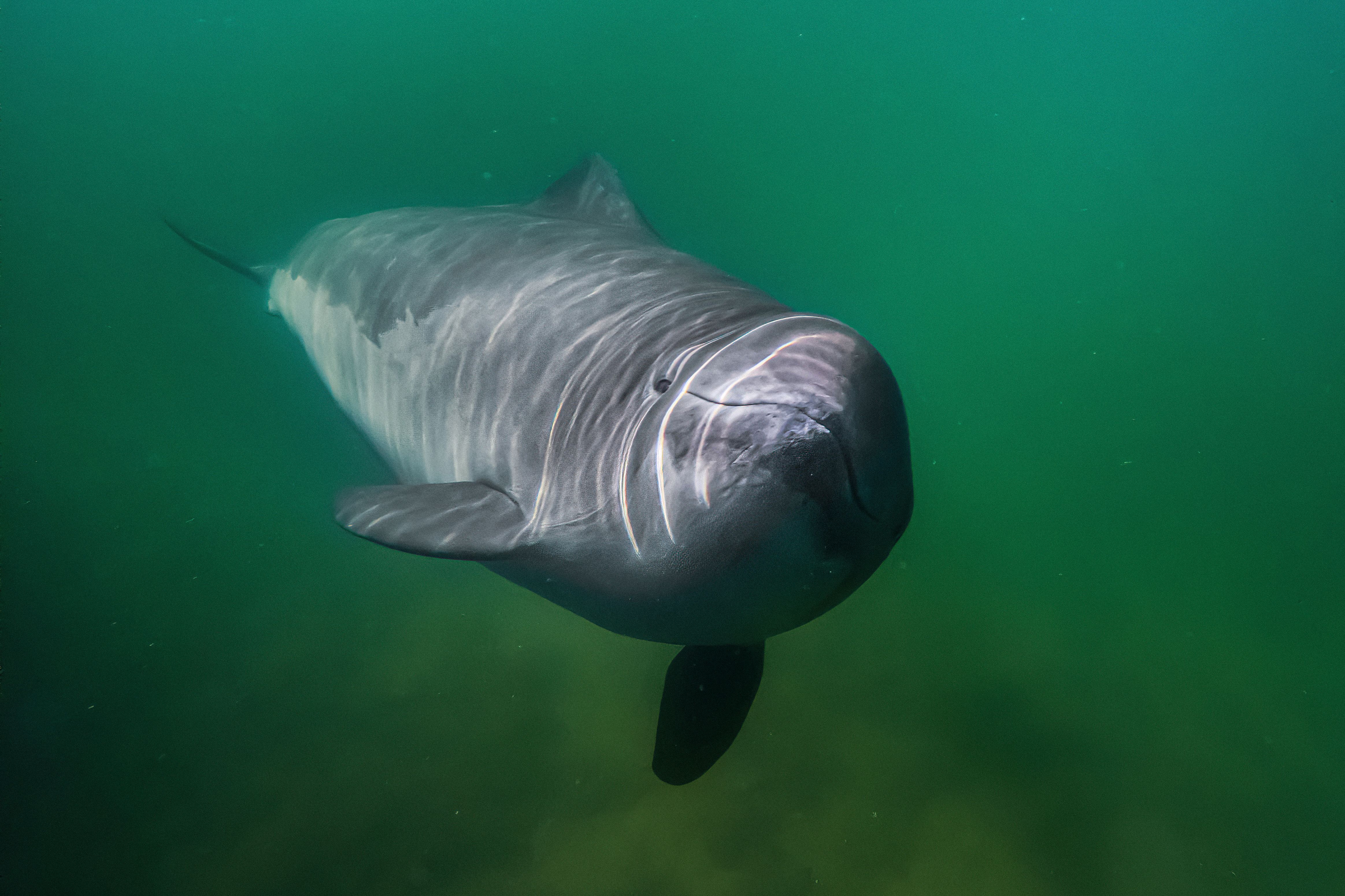
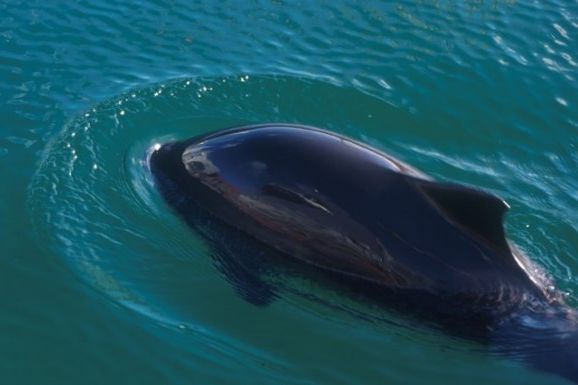
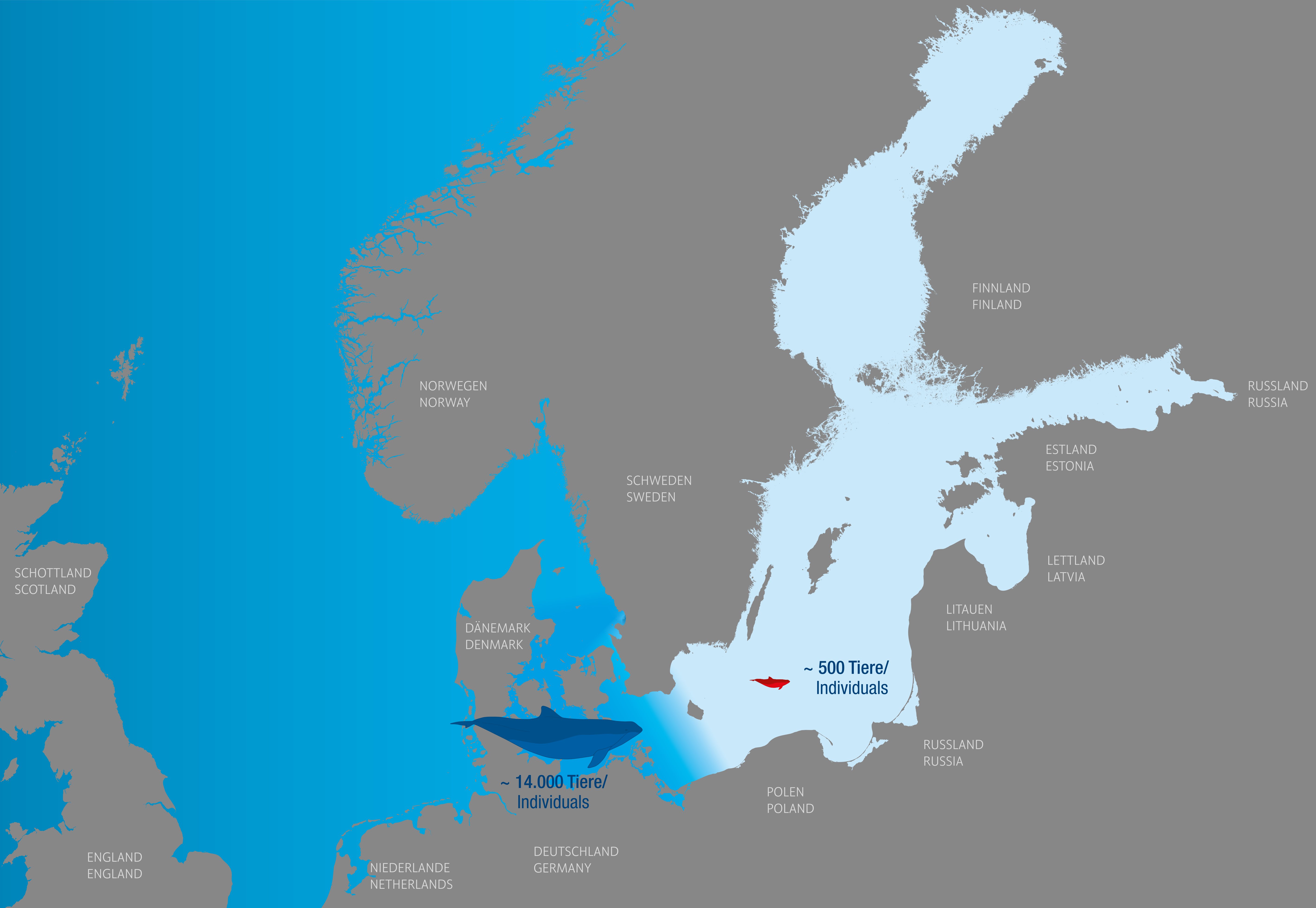
The harbour porpoise (Phocoena phocoena) is the only cetacean species native to the Baltic Sea. Two populations occur in the region: the Baltic Proper population and the Belt Sea population. The Belt Sea population is classified as Endangered by HELCOM and is declining. The Baltic Proper population consists of only a few hundred individuals and is listed as Critically Endangered by the IUCN.
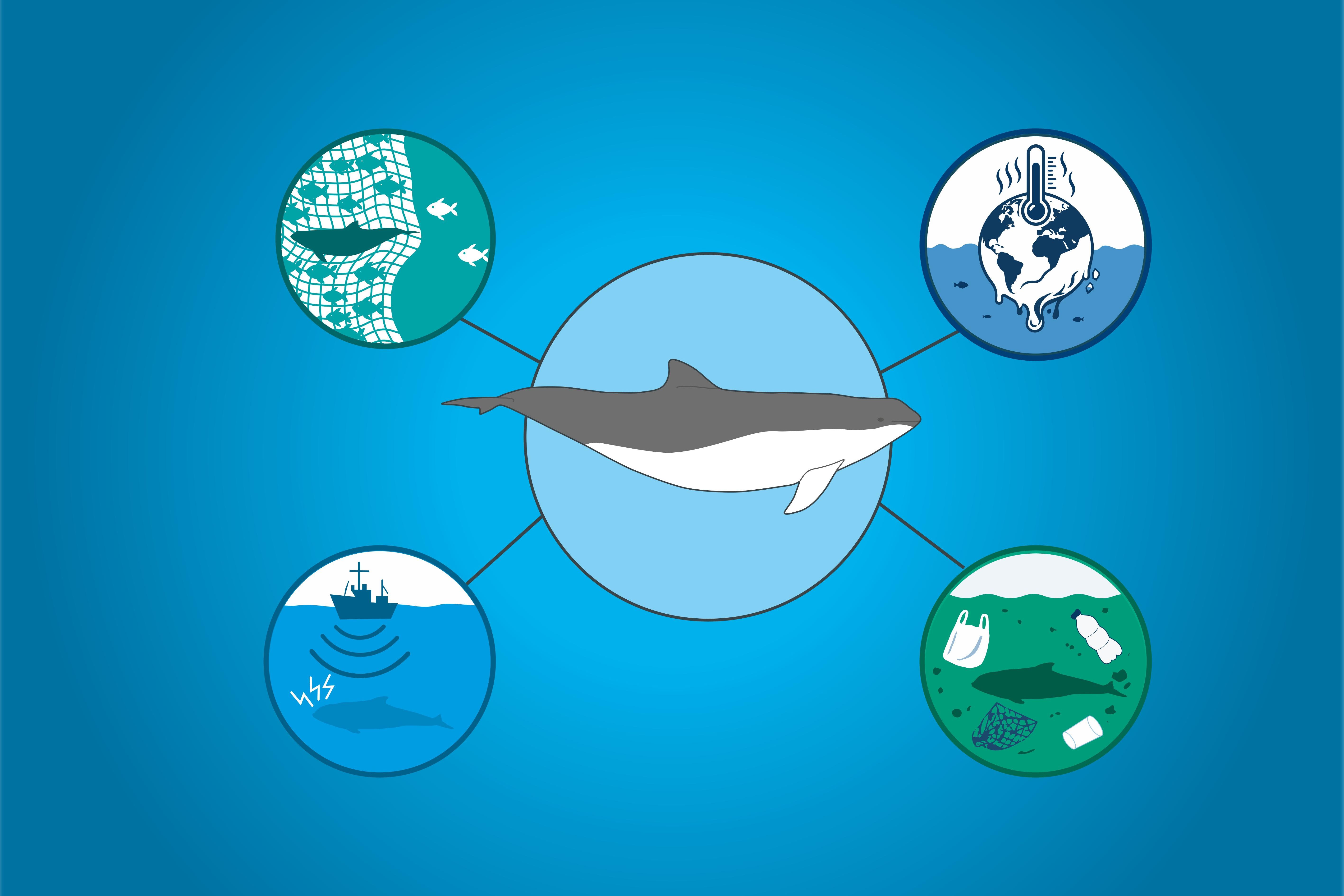
Both populations are exposed to a range of human-induced pressures. Major threats include bycatch in fisheries, underwater noise, contaminants and the degradation and loss of suitable habitats.
Effective long-term conservation requires robust scientific knowledge of population size, distribution, habitat use, and the impacts of these pressures. Despite long-term monitoring programmes, important knowledge gaps remain regarding the status and trends of both populations.
The international research project CUMBIAH (Conservation Union for Management of the Baltic Harbour Porpoise Populations and Their Habitat) brings together existing monitoring data and analyses them using new analytical approaches. The project aims to improve our understanding of the status of harbour porpoise populations in the Baltic Sea and to provide a sound scientific basis for future conservation and management decisions.
Approach and Methodology
Passive acoustic monitoring provides the basis for detecting and monitoring harbour porpoises in the Baltic Sea. Acoustic monitoring devices continuously record the animals’ high-frequency echolocation clicks, allowing their occurrence to be monitored consistently across large spatial and temporal scales.
CUMBIAH analyses data collected during the preceding SAMBAH II project across large parts of the Baltic Sea. These data will be used to produce updated population abundance estimates and high-resolution spatial and temporal distribution maps.
In addition, new methods for acoustically identifying harbour porpoise calves will be tested. These methods will help identify important breeding areas and reproductive periods.
Studies of dead harbour porpoises provide important information on the life history and health status of the populations. Standardised necropsies are used to determine age, sex, body condition, reproductive status, diseases, and causes of death.
Genetic analyses also allow individuals to be assigned to different populations and provide information on genetic diversity. The combined results are used to estimate key population parameters. Among other applications, these parameters are needed to assess the level of additional human-induced mortality that a population can sustain without jeopardising its long-term viability.
Bycatch in gillnet fisheries is one of the major threats to harbour porpoises in the Baltic Sea. CUMBIAH combines data on the spatial and temporal distribution of different fishing activities with information on harbour porpoise distribution.
This approach makes it possible to identify areas and periods of increased bycatch risk. The results provide an important basis for assessing and developing targeted conservation measures.
Harbour porpoise distribution is influenced by a range of environmental and habitat-related factors. CUMBIAH therefore investigates, among other aspects, the availability of potential prey fish, exposure to underwater noise, and other oceanographic and ecological conditions.
Environmental DNA (eDNA) and acoustic fish monitoring are used to investigate the spatial distribution of potential prey species. In addition, maps of anthropogenic underwater noise are produced. By combining this information with results from acoustic harbour porpoise monitoring, the project can identify particularly suitable habitats and assess how different pressures affect habitat quality.
Project Objectives
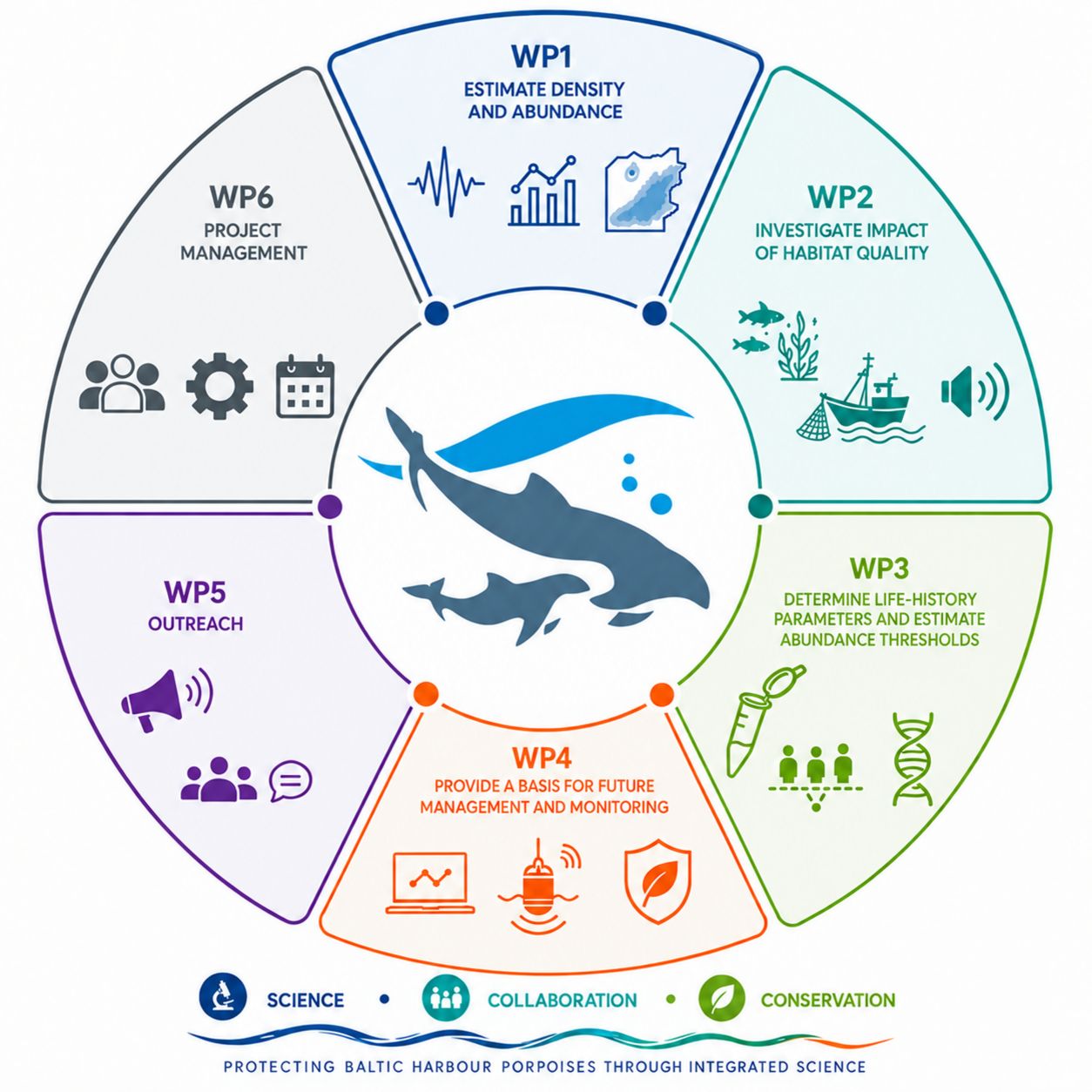
CUMBIAH provides the scientific basis for the conservation of harbour porpoises in the Baltic Sea. To achieve this, acoustic monitoring data, data from stranded animals, fisheries data, genetic analyses, and information on environmental conditions and human activities are brought together and analysed in an integrated approach.
The project focuses on:
-
updating estimates of the abundance and distribution of harbour porpoises in the Baltic Proper;
-
analysing changes in harbour porpoise distribution and abundance since the SAMBAH project;
-
investigating key habitat factors, such as prey availability;
-
analysing anthropogenic pressures, including fishing activities and underwater noise;
-
analysing data from dead harbour porpoises to determine age, sex, health status, reproductive status, and causes of death;
-
investigating genetic diversity and population assignment;
-
deriving population-specific abundance thresholds;
-
further developing and harmonising future monitoring methods; and
-
assessing and prioritising key conservation measures for harbour porpoises in the Baltic Sea.
The overall aim is to improve the assessment of the status and trends of harbour porpoise populations in the Baltic Sea. The results will help identify particularly important habitats and key threats and provide the scientific evidence needed to develop and target effective conservation measures.